
Arizona is one of the fastest-growing metro areas in the United States. With its warm climate, affordable land, and welcoming regulations, Phoenix Mobile Home Pros have become a popular housing option for thousands of residents. It’s why so many property owners explore mobile home repair contractor Arizona for early on to plan smart upgrades and keep their homes resilient against harsh sun and monsoon rains.
What are the Typical Repair Categories and Costs for Mobile Homes?
Typical repair categories for modular homes include mobile home leveling, which corrects foundation shifts, and roofing repairs to handle Arizona’s heat and monsoon damage. Skirting replacement helps with energy efficiency and pest prevention, while tie-down and anchoring services protect homes against high winds. These core services keep manufactured homes safe, stable, and compliant with local codes.
Roof Replacement and Repairs
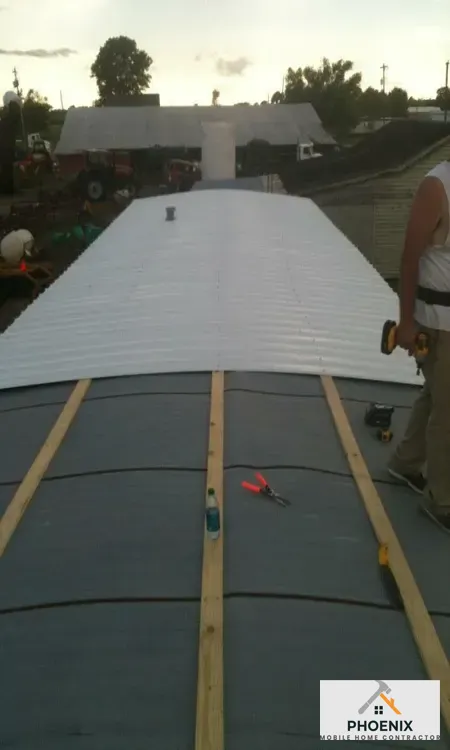
Roofing is often the single largest maintenance cost for trailer homeowners. Standard asphalt shingle or rolled roofs degrade quickly under continuous heat. Many older trailer homes still have metal roofs, which can develop leaks and corrosion. If you’re exploring alternatives, consider the best mobile home roofing options for Arizona climate.
Typical roof costs in Phoenix:
- Basic sealing or recoating for metal roofs ranges from $600 to $1,500, depending on roof size.
- Full roof replacements, especially switching from metal to a modern membrane or shingle system, cost $3,000 to $9,000.
Many homeowners now opt for TPO membranes or reflective coatings that help manage interior temperatures. This pays off long-term by reducing AC loads. For detailed guides, the National Roofing Contractors Association offers excellent resources on roof systems suitable for high-heat zones.
Full roof replacements often range widely. First, know the cost of roof replacement in Arizona for local prices.
Skirting and Underpinning Fixing Expense
Mobile home skirting solutions in Phoenix are vital to protect the underside, regulate airflow, and prevent pest entry. It protects the underside from pests, helps regulate airflow, and gives the home a finished look. Cracked or missing panels can invite rodents and cause insulation losses.
Average costs:
- Vinyl skirting replacement runs $800 to $2,000, depending on perimeter length.
- Insulated skirting may cost $2,500 to $4,500 but improves energy efficiency significantly.
Insulated skirting may cost more upfront, but it significantly improves comfort. If your panels are damaged or outdated, look up the typical costs for modular home skirting replacement to see your options.
Most Arizona local codes require vented skirting to avoid moisture buildup. Always check with the Phoenix Planning & Development Department to ensure compliance before making changes.
HVAC and Cooling Upgrades or Repair
With summer temperatures frequently crossing 110°F, your prefabricated home’s cooling system is more than a comfort feature — it’s a necessity. Older modular homes may only have basic swamp coolers, but HVAC ductwork upgrades for mobile homes offer better cooling efficiency. Upgrading to a modern split AC system or even high-efficiency heat pumps is common.
Expected costs:
- New swamp coolers are relatively affordable, around $1,200 to $2,500 installed.
- Central AC systems range from $4,000 to $8,500 based on tonnage and ductwork.
- Mini-split systems cost $3,500 to $6,000, ideal for homes without existing ducts.
Don’t forget the long-term savings. Efficient systems often qualify for APS or SRP utility rebates, so check programs on APS or SRP sites.
How much the Costs for Modular Home Flooring and Subfloor Repairs?
Many mobile homes use particle board subfloors, which swell and weaken when exposed to leaks. If your water heater or plumbing ever failed, you might face soft spots or even structural holes.
Common repairs include:
- Plywood or OSB patching: $300 to $900 for small areas.
- Full room floor replacement, with new vinyl or laminate: $1,200 to $3,500.
For larger issues where the floor joists are damaged, costs escalate. Replacing damaged joists and re-laying subfloor could push totals to $4,500 or more, especially if multiple rooms are involved.
How much will the expenses be for plumbing, electrical work, and interior upgrades in a modular home?
The Combined Plumbing + Electrical + Interior Upgrades cost for a mobile home would be, Low-end (minor repairs): $2,500 – $6,000, Mid-range (most common): $8,000 – $22,000 and Full upgrades / older home rehab: $25,000 – $55,000+.
In this regard, home improvement project estimator will be helpful. So, use a mobile home remodeling cost calculator to understand better.
1. Plumbing Costs in Arizona
Expect to spend $150–$8,000 depending on whether you need a small repair or a full replacement.
Typical Costs
- Minor leak repair: $150–$350
- Toilet replacement: $220–$550
- Water heater replacement (electric): $900–$1,800
- PEX repiping (full home): $3,000–$8,000
- Drain line repair or replacement: $250–$1,200
Arizona Factors
- Hard-water conditions increase wear on pipes and fixtures.
- Crawl-space heat exposure in Phoenix raises labor difficulty in summer months.
2. Electrical Costs in Arizona
Electrical upgrades typically range from $80–$10,000, depending on the scope.
Typical Costs
- Outlet or switch replacement: $80–$180 each
- Electrical panel upgrade (100–200 amp): $1,800–$3,500
- Light fixture install: $150–$350
- Full home rewiring: $4,000–$10,000
- HVAC or appliance circuit install: $300–$900
Arizona Factors
- Homes in Phoenix metro often need upgraded circuits to support AC loads.
- Older modular homes (80s–90s) may require aluminum-to-copper pigtailing for safety.
3. Interior Upgrades (Mobile & Modular Homes)
Interior remodels generally cost $1,200–$18,000 for standard updates, with full renovations reaching $25,000+.
Typical Costs
- Flooring (vinyl plank): $4.50–$8.50 per sq. ft. installed
- Kitchen remodel: $3,500–$18,000
- Bathroom remodel: $2,500–$12,000
- Drywall repair or replacement: $300–$2,500
- Cabinets (replacement): $1,200–$6,000
- Painting (interior): $1,200–$4,500
Arizona Factors
- Sun exposure can warp older paneling and fade flooring.
- Cooler-tone remodels (grays, whites) are trending in Phoenix-area modular homes.
How Modular House Resale Value Impacts from Repairs and Upgrades?
Some homeowners hesitate to invest on mobile home renovation services, fearing they won’t recoup costs, fearing they’ll never recoup costs. In fact, smart repairs and compliance-focused improvements often increase resale value significantly.
Key Value Drivers
- A new roof with transferable warranty can boost buyer confidence.
- Modern skirting and freshly leveled piers improve curb appeal and prevent inspection issues.
- Upgraded HVAC systems with SEER ratings matching Arizona rebates signal lower future operating costs.
Buyers in Phoenix’s competitive market appreciate turnkey homes. Spending on structural essentials pays off far better than investing solely in cosmetic updates.
What will be the Annual Repair Checklist for Mobile Homes?
The core annual repair checklist for a modular home includes roofing, foundation and leveling, HVAC system as well as plumbing and drainage system. Staying ahead of repairs reduces long-term costs. Because of Arizona’s extreme heat and occasional monsoons, proactive care is essential.
Roofing and Exterior Checks
- Inspect roof seams and edges for cracking or peeling each spring.
- Look for rust spots or popped screws on metal roofs after heavy rain.
- Check that skirting panels are intact and properly vented.
Foundation and Leveling
- Walk through the home to see if doors or windows stick, a common sign of shifting piers.
- Inspect visible support piers for erosion or leaning.
Cooling Systems
- Clean or replace AC filters monthly during summer.
- Schedule professional HVAC tune-ups before May.
Plumbing and Drainage
- Examine under-home water lines for drips or bulging spots.
- Ensure gutters and downspouts route water away from the skirting perimeter.
Final Thoughts
Mobile homes remain an affordable, flexible way to enjoy life in the greater Phoenix area, provided owners plan wisely for upkeep. With clear expectations around roofing, skirting, leveling, cooling systems, and safety updates, you’ll be well positioned to keep your home comfortable and compliant for years to come.